


Indian Railways Expands Nationwide Asbestos Roof Replacement Project to Improve Safety and Modernize Station
Summary
Indian Railways is accelerating the replacement of asbestos roofs with modern metal roofing across stations nationwide. The initiative aims to enhance passenger safety, modernize infrastructure, and reduce potential health risks associated with aging asbestos materials. Thousands of stations are expected to benefit from the long-term upgrade.
Table of Contents
Railways Move Towards Phasing Out Asbestos Roofing
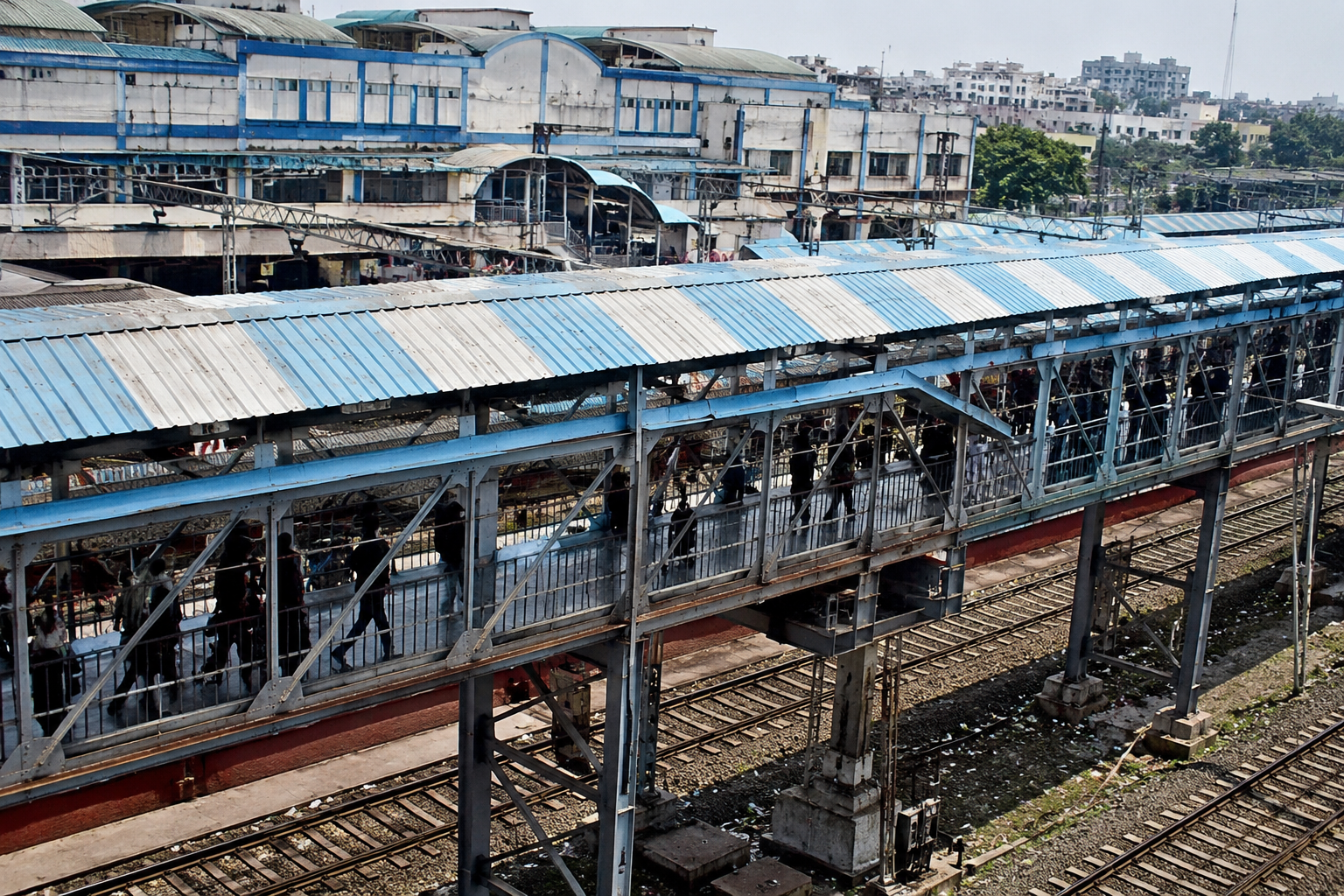
In June 2009, this journalist reported that the deteriorated asbestos roof of a pedestrian bridge at a railway station in Mumbai was being replaced with metal sheets. What appeared to be a minor development at a suburban station has since become part of a much larger initiative.
Today, the Indian Railways is undertaking a major project to replace asbestos roofing with metal sheets across its network. Recently, it announced that all newly constructed railway stations will use metal sheet roofs, while asbestos roofs at existing stations will be gradually phased out.
Widespread Use of Asbestos in Indian Railways
Asbestos cement sheets have long been an important construction material for Indian Railways. Most of India’s nearly 8,000 railway stations contain asbestos in some form. These sheets are manufactured by bonding naturally occurring asbestos fibres with cement and are commonly used for roofing, partitions, workshops, workers’ quarters, and insulation in areas exposed to extreme weather conditions.
Health Concerns Associated with Asbestos
Studies have shown that asbestos fibres may pose health risks. According to the Agency for Toxic Substances and Disease Registry (ATSDR) in the United States, prolonged inhalation of asbestos fibres can cause asbestosis, a condition that scars the lungs. Exposure may also lead to pleural diseases that affect the lining of the lungs, and in some cases, certain forms of cancer.
The ATSDR notes that not everyone exposed to asbestos develops health problems, but individuals with existing health conditions may be more vulnerable to its effects.
Why Railways Are Choosing Metal Sheets
Railway officials cite both practical and aesthetic reasons for replacing asbestos roofing. Metal sheets come pre-painted, provide a more attractive appearance, and do not break upon impact, although they may bend. In contrast, asbestos sheets require painting after installation and can crack or break over time.
Industry Response to Asbestos Concerns
Manufacturers of asbestos products argue that concerns regarding asbestos are often overstated. The Asbestos Cement Products Manufacturers Association (ACPMA) maintains that only certain asbestos products pose health risks and claims that some anti-asbestos campaigns are supported by iron product manufacturers that could benefit from restrictions on asbestos use.
During hearings related to legal petitions seeking tighter controls on asbestos products, ACPMA alleged that producers of ductile cast iron had backed litigation targeting asbestos manufacturers.
“Actually, as far as we are concerned, health-wise there is no problem in the manufacture, sale and distribution of what you call asbestos in India,” said G. Vivekanand, Chairman of ACPMA.
Manufacturers Defend Asbestos Cement Products
Industry representatives acknowledge that raw asbestos requires careful handling during manufacturing and packaging. However, they argue that asbestos fibres used in roofing sheets are securely bonded with cement and therefore cannot easily become airborne.
According to Vivekanand, asbestos fibre content in Indian asbestos cement products can be as low as eight percent. He stated that certain types of asbestos fibres used for insulation purposes are more problematic, while asbestos cement products are scientifically manufactured and considered safe.
Vivekanand also suggested that the Railways’ preference for metal roofing may be driven more by appearance than safety concerns, arguing that asbestos sheets generally have a longer lifespan than metal sheets.
Limited Impact on the Asbestos Industry
ACPMA believes that the Railways’ decision to reduce asbestos usage will have only a limited effect on the industry. The association notes that asbestos manufacturers are no longer heavily dependent on government construction projects and continue to find markets elsewhere.
Opposition from Health Advocacy Groups
Organizations such as the Ban Asbestos Network of India (BANI) continue to campaign against the use of asbestos. The group argues that concerns about asbestos-related health risks have led many countries around the world to ban its manufacture and use.
BANI also points out that asbestos-containing materials are widespread in India, estimating that very few public buildings are free from asbestos products.
Challenge of Asbestos Waste Disposal
The removal and disposal of asbestos materials from railway properties presents a significant challenge. As asbestos-containing products deteriorate, they can release fibres into the air, potentially increasing exposure risks.
To address this issue, Indian Railways has stated that asbestos waste generated during replacement projects will be disposed of using scientific landfill methods designed for safe handling and containment.